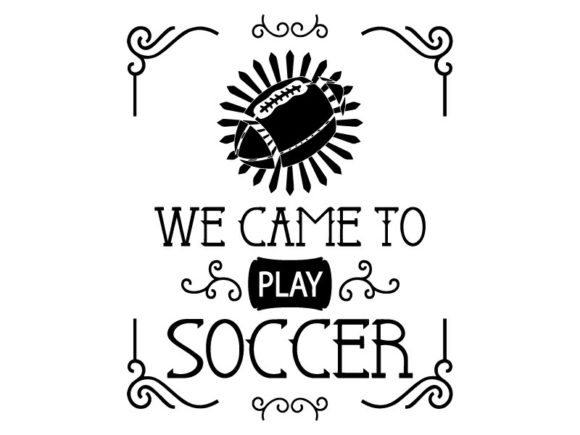
We Came to Play Soccer Graphics & Print Templates
When I first opened We Came to Play Soccer in my design software, I immediately pictured a whole collection of handmade products for young athletes, soccer moms, and team spirit events. This graphic design asset has a playful energy that is hard to find in standard sports clipart. It does not feel like generic stock art. It feels like something you would actually want to press onto a t-shirt, print on a mug, or turn into a sticker for a kid's water bottle. The mood is clean, energetic, and just a little bit cheeky, which makes it perfect for casual team celebrations, youth sports fundraisers, and personalized gifts that families actually get excited about.
As someone who designs for craft fairs, Etsy orders, and small-batch handmade production, I look for designs that strike a balance between bold visual impact and practical usability. We Came to Play Soccer lands right in that sweet spot. The lettering carries a confident, playful tone that appeals to both children and adults. It is not overly cute, nor is it too serious. It works for birthday party decor, end-of-season coach gifts, team snack bag tags, and even quick last-minute orders when a customer reaches out asking for something custom. The design feels versatile enough to stretch across multiple product categories without losing its identity.
First Impressions and the Vibe This Design Creates
The text style in We Came to Play Soccer has a hand-lettered, slightly sporty feel that reminds me of what you might see on a warm-up jersey or a spirited sideline banner. The composition is straightforward, making it easy to read at a glance, which is exactly what you want for a design that might end up on a tumbler wrap, a tote bag, or a poster. The overall mood is energetic and friendly, with a touch of competitive fun. It does not scream aggressive sports energy. Instead, it invites a smile, which is exactly what many handmade sellers need when creating products for children's markets, family-oriented craft fairs, and school fundraising events.
I could immediately see this design paired with a bold sans serif font for team names, or softened with a rounded script font for a more personalized, gift-style look. The visual personality of this graphic design asset makes it flexible enough for both masculine and feminine product styling, depending on how you choose to accessorize it with colors, backgrounds, and complementary elements. For a minimal, clean look, it works beautifully on its own. For a more decorative handmade product, it plays well with stars, soccer ball illustrations, and subtle field line graphics.
What Kind of Handmade Products This Design Naturally Suits
After testing We Came to Play Soccer across a few different product mockups, I found it performs exceptionally well on medium to large surface areas. The design reads clearly and maintains its impact when scaled appropriately. Here are the product categories where I believe this design truly shines:
- T-shirt designs for youth soccer teams, spirit wear, and family game day outfits
- Mug designs for coach appreciation gifts, team parent thank-you gifts, and sideline coffee cups
- Tumbler wraps for personalized player cups and tournament souvenirs
- Tote bags for carrying cleats, shin guards, and snacks to the field
- Sticker designs for water bottles, laptops, and equipment cases
- Party decorations including banners, cupcake toppers, and favor tags
- Greeting cards for soccer birthdays, end-of-season celebrations, and team spirit notes
- Printable wall art for bedroom decor, playroom galleries, and sports-themed nurseries
- Gift tags for team party favors and tournament goodie bags
What I appreciate most about We Came to Play Soccer as a Print Templates asset is how quickly I can drop it into a layout and build a complete product around it. For Etsy sellers and craft fair vendors, speed matters. When you are preparing for a seasonal rush or a last-minute customer order, you need a design that works with minimal fuss. This one does. I created a mockup for a set of team spirit t-shirts in under ten minutes, and the result looked polished and professional enough to list immediately.
Working With SVG, PNG, and DXF Formats in Real Crafting Workflows
One of the first things I check when I receive a new graphic design asset is how clean the SVG cut lines are. For Cricut projects and Silhouette projects, the quality of the vector paths determines whether you will spend five minutes setting up a cut file or forty-five minutes troubleshooting jagged edges, weird nodes, and broken paths. With We Came to Play Soccer, the SVG file opened smoothly in my software. The cut lines were clean, the shapes were well-grouped, and I did not need to do any major node editing before sending it to my machine.
For crafters who use vinyl cutting as a primary production method, this matters enormously. When you are cutting a stack of twenty shirts for a team order, you cannot afford to babysit a finicky design that keeps tearing or misaligning. The solid letterforms in this design cut well on adhesive vinyl, heat transfer vinyl, and even stencil material. I tested a medium-sized cut on permanent vinyl for a tumbler application, and it weeded cleanly with no broken letters or thin spots that might lift during transfer.
The PNG Transparent file is equally useful for sublimation design, printable projects, and digital mockup placement. I opened the PNG in my sublimation software and placed it on a mug template. The edges were crisp, the transparency was clean, and the design sat beautifully on both light and dark backgrounds. For print-on-demand sellers and creative marketplace designers, having a high-quality transparent PNG ready to go saves serious time when you are building product listings and mockup presentations.
Where This Design Performs Best and Where Caution Is Needed
In my experience, We Came to Play Soccer is strongest when used on products that allow the design to breathe. It works beautifully as a focal point on a t-shirt, a centered design on a mug, or a bold statement on a tote bag. The lettering is substantial enough to hold its own without needing a lot of extra decorative elements, which makes it ideal for clean, modern handmade products that appeal to minimalist shoppers and busy parents alike.
However, there are a few practical considerations I want to share based on real crafting experience. When scaling this design down for very small products, pay attention to the letter spacing and the thinnest parts of the text. For tiny sticker designs, planner stickers, or small gift tags, the design may need slight simplification or resizing to ensure every letter remains readable and every cut line stays intact. This is not a flaw in the design. It is simply the reality of working with text-based graphics at small sizes. I would recommend keeping this design at a minimum width of around two inches for vinyl cutting and around one inch for sublimation prints, depending on your equipment and material.
Also, if you are layering this design with other elements such as soccer ball graphics, player silhouettes, or additional text, be mindful of visual crowding. The playful energy of We Came to Play Soccer works best when it is given a little space. A cluttered composition can dilute the impact and make the final product feel less professional. I learned this the hard way early in my handmade business journey, and now I always preview my layouts on a product mockup before committing to a full production run.
Practical Tips for Crafters, Etsy Sellers, and Handmade Business Owners
If you are planning to use We Came to Play Soccer for customer orders, seasonal collections, or handmade business branding, here are a few practical tips that will help you avoid common pitfalls and get the most out of this design asset:
- Test the file before selling finished products. Always run a sample cut or print before listing items in your shop. Different materials, machines, and settings can produce different results, and it is better to discover any issues on your own time rather than on a customer's order.
- Check SVG lines for clean cutting. Even though the file I received was in great shape, it is always wise to preview the cut paths in your software before sending it to your machine. Look for stray nodes, overlapping paths, and areas that might need slight adjustment for your specific vinyl or material thickness.
- Preview PNG transparency on both light and dark backgrounds. A design that looks perfect on a white t-shirt mockup might show unexpected edges or artifacts on a dark background. Always test your PNG on a few different product colors before finalizing your listing photos.
- Confirm resolution for sublimation. If you are printing on mugs, tumblers, or fabric, make sure the PNG file is at a high enough resolution for your specific press and substrate. Low-resolution graphics can look fuzzy or pixelated after sublimation, which is a quick way to lose customer trust.
- Test colors before printing. Colors on screen do not always match printed output, especially with sublimation and heat transfer processes. Run a small test print to confirm that the colors meet your expectations and your brand standards.
- Place the design on real mockups. Before you list a product, place the design on a realistic product mockup to see how it interacts with the product shape, seams, handles, and edges. This helps you catch layout issues early and gives your customers a clear preview of what they are buying.
- Resize thoughtfully for different products. A design that fills a t-shirt perfectly might overwhelm a mug or get lost on a tote bag. Adjust the scale proportionally for each product type, and consider creating a few size variations for different applications.
- Pair with complementary fonts wisely. This design works well with clean sans serif fonts for team names, warm handwritten fonts for personalized messages, and classic serif fonts for a more elevated, boutique-style look. Avoid overly decorative display fonts that compete with the main lettering.
- Confirm commercial licensing. Before using We Came to Play Soccer on products you intend to sell, make sure your license covers commercial use, print-on-demand, and handmade product sales. Licensing terms vary between marketplaces, and staying compliant protects your business in the long run.
How This Design Fits Into a Handmade Business Strategy
From a small business perspective, We Came to Play Soccer is a smart addition to a seasonal product lineup. Youth sports seasons run year-round in many communities, and the demand for personalized team gear, coach gifts, and party supplies is steady. Having a reliable graphic design asset that you can pull out whenever a soccer-related order comes in reduces your design time and helps you fulfill orders faster. For Etsy sellers, faster turnaround often translates to better reviews, more repeat customers, and higher search visibility.
I also see this design working well in a design bundle or a themed collection. Pair it with other sports graphics, coordinating patterns, and complementary clipart to create a full suite of products for a craft fair booth or a seasonal shop update. Customers love cohesive collections, and offering matching items such as a t-shirt, a mug, and a sticker set can increase your average order value significantly.
For printable product creators, We Came to Play Soccer can be incorporated into digital downloads such as party invitation templates, printable wall art sets, and DIY decoration kits. The design reads well on paper, and the clean lines make it suitable for at-home printing on standard inkjet and laser printers. When you are building a printable product line, having a few versatile text-based graphics like this one gives you flexibility to create multiple listings from a single asset.
Final Thoughts From a Crafter Who Has Tested This Design
After working with We Came to Play Soccer across several product types and testing it on both my cutting machine and my sublimation setup, I can confidently say this is a practical, well-made graphic design asset that delivers on its promise. It is not a complicated, overly detailed illustration that requires hours of preparation. It is a clean, energetic, and instantly usable design that fits into a real handmade production workflow. Whether you are a Cricut user making team shirts for a local soccer club, a Silhouette user creating personalized tumblers, or an Etsy seller building a printable party collection, this design earns its place in your creative toolkit.
The file formats are versatile, the cut quality is solid, and the overall look is polished enough to sell on finished products without needing heavy modification. For crafters who value efficiency, quality, and designs that connect with real buyers, We Came to Play Soccer is a worthwhile addition to your design library. I recommend it for handmade business owners who want to expand their sports-themed offerings, serve the youth athletics market, and create products that feel both personal and professional.